Solutions when the standard is exceeded
If the standard is exceeded, a correctly dimensioned sound-insulating enclosure is often the most effective measure. Such an enclosure reduces the noise by 10 to 20 dB, enough to bring a heat pump that measures just above, or well above, 40 dB(A) back within the standard.
Ventilation is crucial here. An enclosure must not obstruct the air supply to the outdoor unit, or the unit will overheat and its efficiency will drop. We calculate how much noise reduction is needed and advise on a solution that keeps the ventilation intact. Because we do not sell products, that advice is independent. Besides an enclosure, vibration dampers, a different mounting position or a noise screen can also help.
The two legal routes for heat pump disturbance
If your neighbours' heat pump exceeds the standard, you have two routes. You can ask the municipality to take enforcement action over the breach of the BBL. An independent measurement report substantiates that request and prevents your complaint from being brushed aside for lack of objective evidence.
You can also bring civil proceedings for unlawful nuisance (article 5:37 Dutch Civil Code). In that case too our measurement report is the evidence: it demonstrates in black and white that the standard is being exceeded. We have been delivering legally usable reports since 1994 and have now produced more than 10,000 of them. If you need a permit, or supporting evidence for the municipality, we also carry out an acoustic survey for permits.
What the court weighs up in heat pump noise cases
In disputes about heat pump noise the court does not look at how disturbing the resident finds the noise, but at whether the statutory limit of 40 dB(A) is genuinely exceeded. Unlike for hospitality venues and businesses, where the environmental plan sets a more lenient daytime standard and a stricter night-time standard, the BBL sets one fixed limit for the outdoor unit. What is decisive is whether a correct measurement at the right assessment point has demonstrated that the installation exceeds it.
This is also clear from recent case law. In rulings by the District Court of North Holland (ECLI:NL:RBNHO:2023:10412) and the District Court of Zeeland-West-Brabant (ECLI:NL:RBZWB:2024:313) about the outdoor unit of a heat pump, the central question in each case was whether a measurement following the prescribed determination method had demonstrated that the 40 dB(A) standard was exceeded. The mere fact that the neighbours can hear the installation is legally insufficient. An independent measurement report that precisely follows the determination method from the BBL therefore makes the difference between a strong case and a hopeless one.
Measuring the noise yourself with an app versus a professional measurement
A noise app on your phone gives an indication, but no evidence. The microphone of a smartphone is not calibrated and does not measure in Class 1. How far the reading is off varies by phone and by app, and the difference can be considerable. An app also lacks the frequency analysis needed to determine the correction for an audible tone.
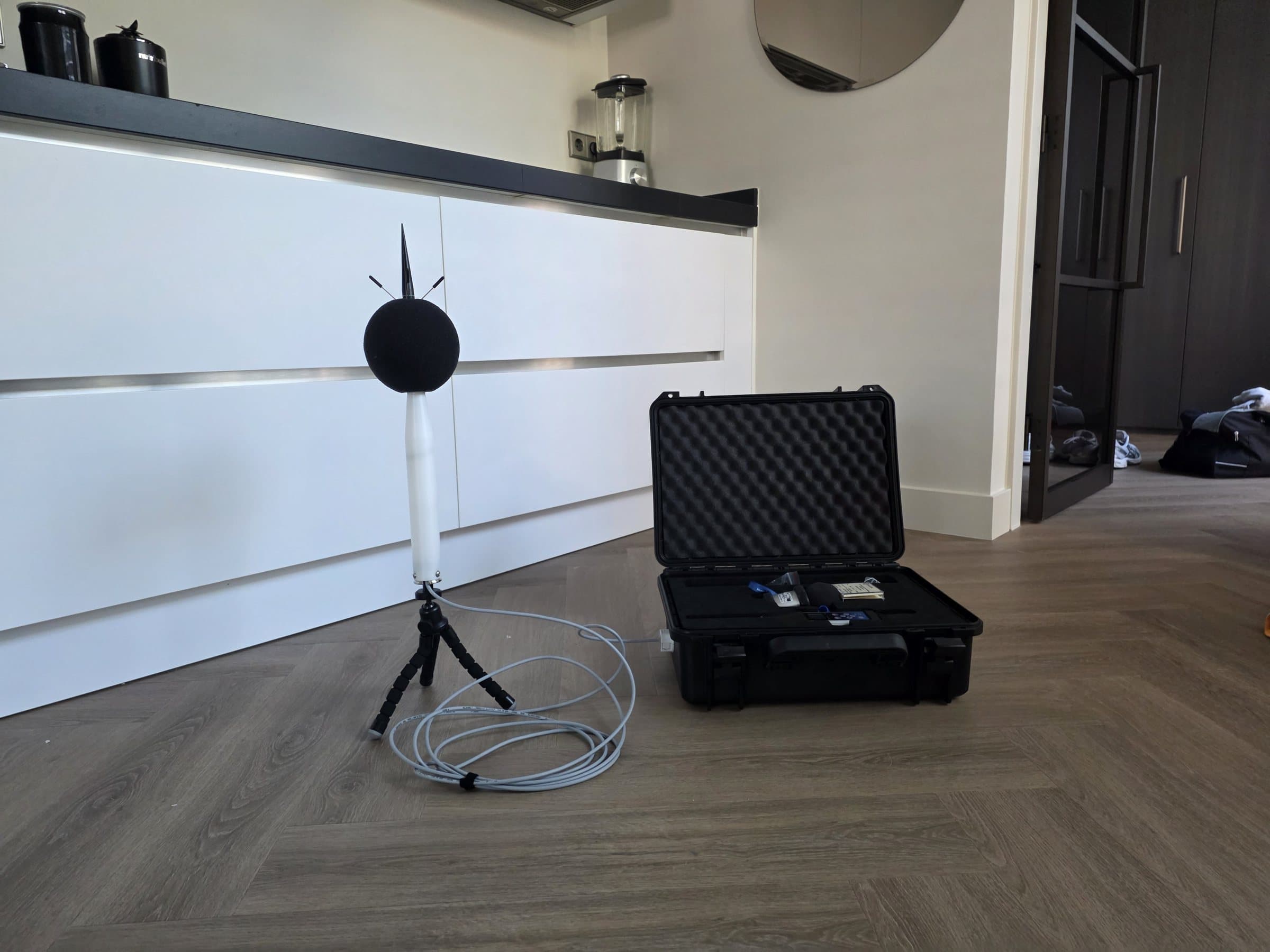
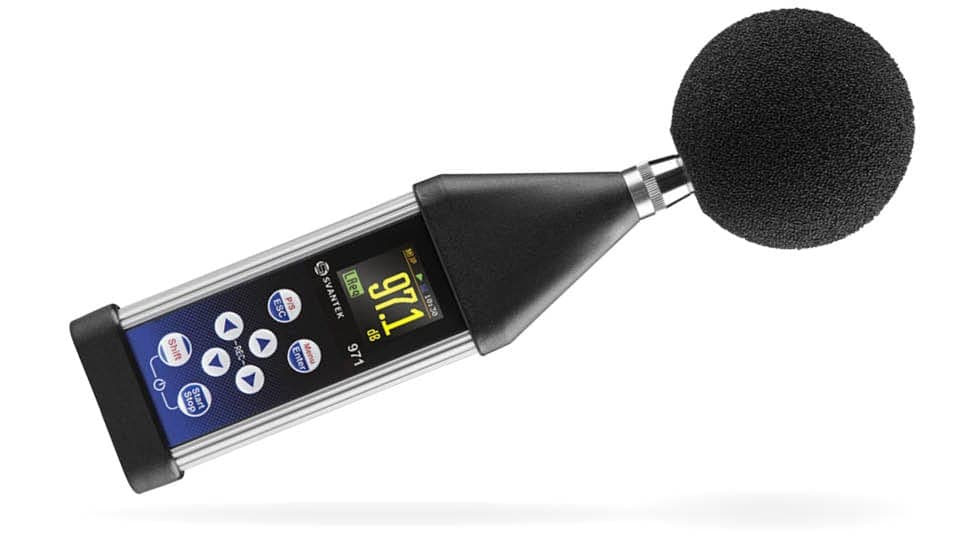
In a conversation with the neighbours an app can help to back up your suspicion. But the municipality and the court accept only a measurement with a calibrated Class 1 meter, carried out at the right measurement point in accordance with the determination method from the BBL. Only then is the report legally usable. We assist private individuals as well as businesses.