|

Noise through the floor? Measuring and solving impact noise.

Impact noise through the floor is the number one complaint in Dutch apartments. Every footstep, running child, shifted chair or dropped object causes vibrations that are transmitted through the floor construction to the apartment below. Especially with hard floor coverings such as laminate, parquet or tiles, impact noise is a structural problem.

Schedule free consultation

How does impact noise occur?

Impact noise differs fundamentally from airborne noise. Where airborne noise travels through the air, impact noise travels as vibration through the building structure. A hard knock on the floor sets the entire construction into vibration, and those vibrations radiate as sound into the room below. The harder and stiffer the floor, the better the vibrations are transmitted. Precisely for that reason a hard floor without underlay is so problematic.

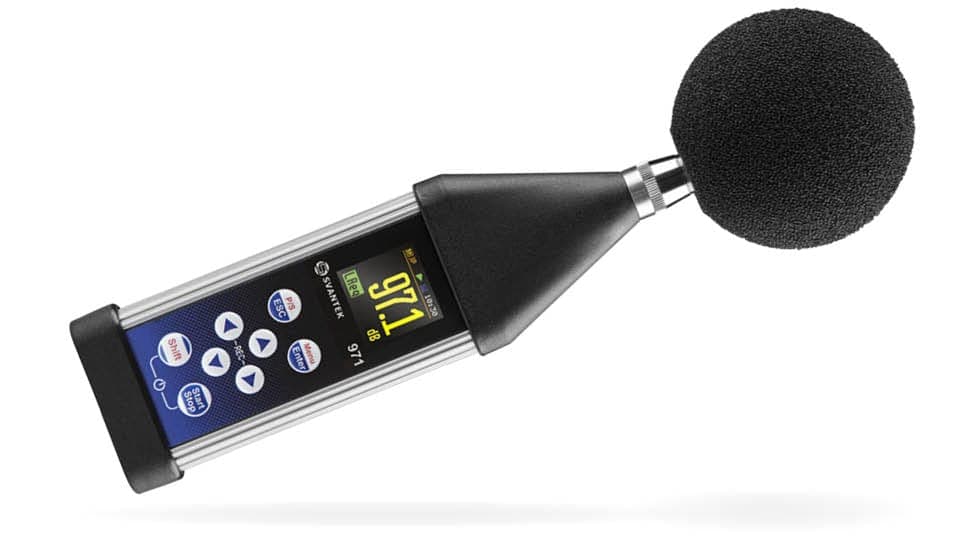
Svantek SV 971A klasse 1 geluidsmeter

The measurement method: standardised tapping machine

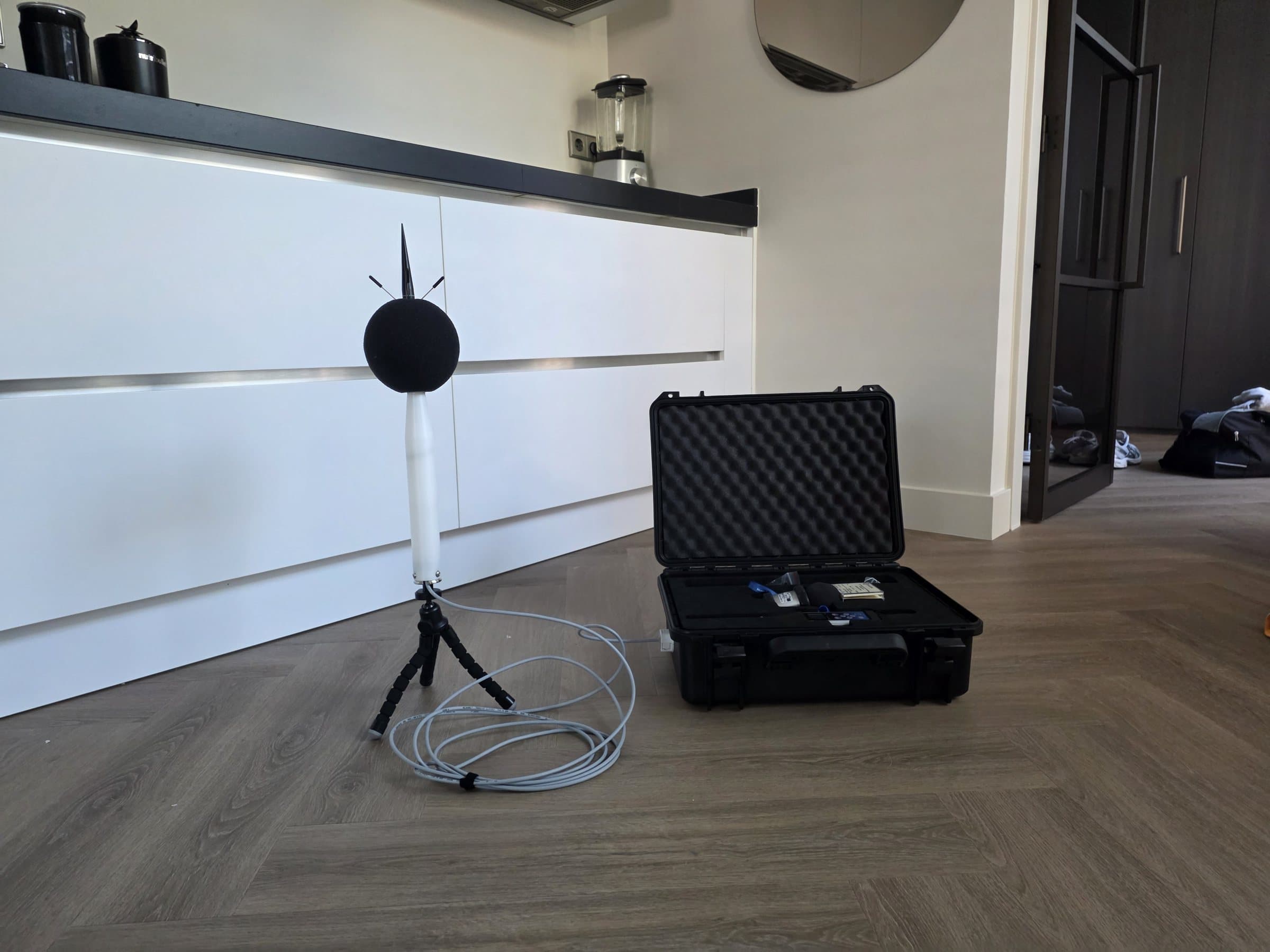
We measure impact noise compliant with NEN-EN-ISO 16283-2 with a standardised tapping machine. This instrument produces a standardised series of impacts on the floor while we measure the sound level in the room below. The result is expressed as LnT,A. The lower the value, the better the insulation. For new construction the requirement is LnT,A less than or equal to 54 dB under the BBL.

Common causes of impact noise

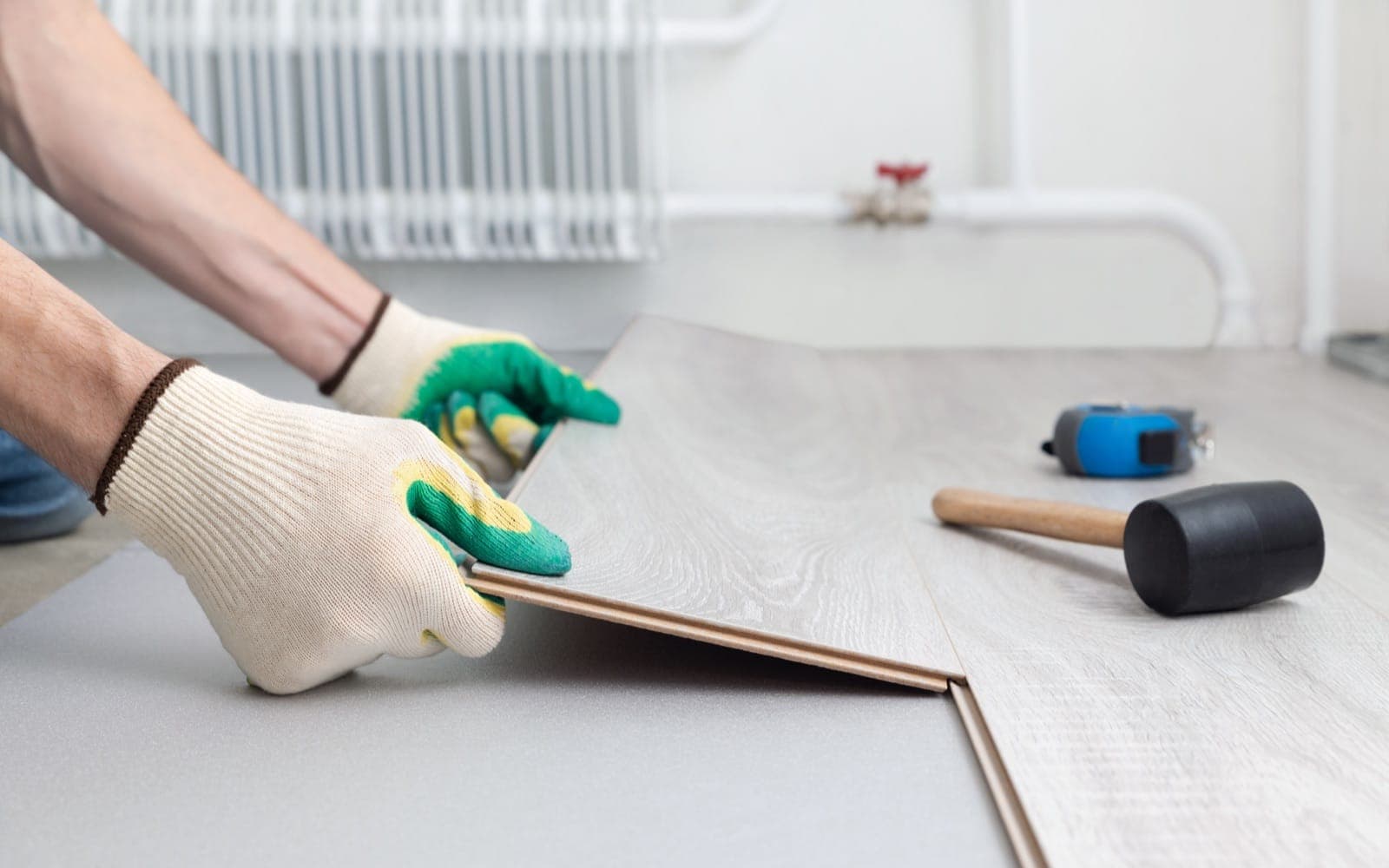
The most common cause is the installation of laminate, parquet or tiles without an adequate acoustic underlay. In older apartments with timber joist floors the construction is already moderately insulating by nature. Other causes: flanking sound transmission via walls or columns, an underlay layer that is too thin on concrete floors, and insufficient decoupling in floating screeds. Sometimes the underlay is installed correctly but edge insulation has been forgotten, so noise is still transmitted through the wall-floor connection.

Laboratory values versus practice

The acoustic values stated by manufacturers are measured in a laboratory. In practice these always fall lower due to flanking transmission, careless installation and divergent constructions. The actual improvement is usually 30 to 50% lower than the lab value. An underlay that achieves 22 dB in the lab will only deliver 11 to 15 dB improvement in practice. Precisely for that reason a measurement in your home is essential before you invest.

Effective solutions for floor noise

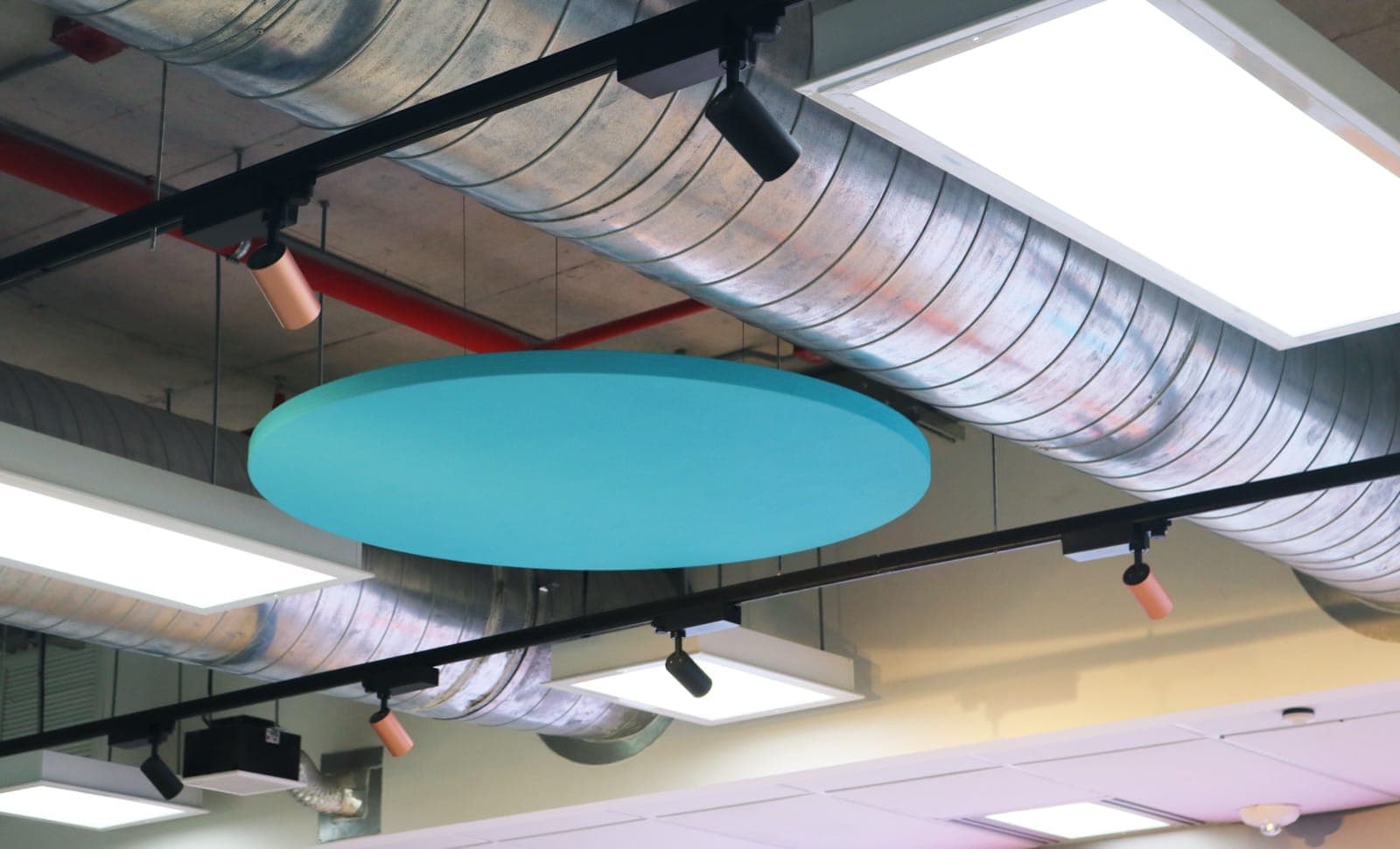
Based on the measurement results we advise: a floating screed on an acoustic insulation layer (most effective), an underlay system below laminate or parquet, ceiling insulation on the underside when floor measures are not possible, or a combination. We specify materials and thicknesses based on the measured frequencies, product-neutral.

Consultation or direct quote

Schedule a free consultation or request a direct quote via the form. We respond within one business day.

+31 (0)20 808 70 90
info@kgigroep.nl
Keizersgracht 241
1016 EA Amsterdam